Can't personalize beyond basic email and SMS
Seven percent of sales came from getting the recommendation right
Maestra Platform is the all-in-one retention marketing platform for ecommerce brands, and its recommendations are set up and tuned by your forward-deployed marketer.
Brands running on Maestra






The problem
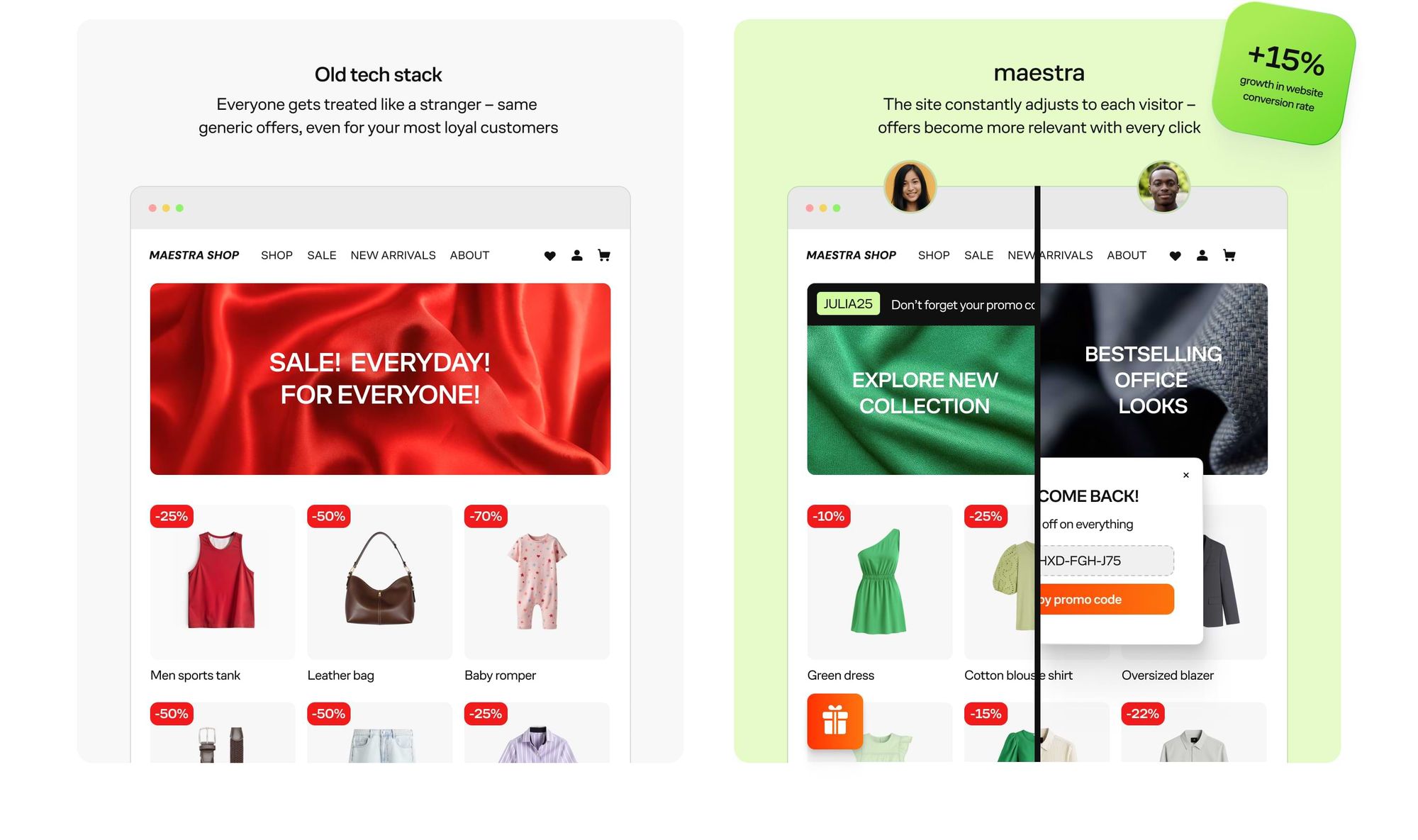
Loyal customers get treated like strangers
Segmentation frequently stops at new versus returning, so a customer with five, ten, or twenty past orders receives the same generic campaign as a first-time browser. The data to do better already sits in the order history; it just is not connected to what gets shown or sent.
What we hear from brands
all email marketing is very generic, with no personalization or segmentation, even for customers with 5-20+ orders, according to a DTC brand with a base of repeat loyalists
repetitive messages that do not feel tailored to the individual customer's experience, according to a four-person accessories brand
currently relying on guesswork, since the needs of someone buying for a newborn versus a 5-year-old are vastly different, but every customer gets generic communications, according to an organic kids' clothing brand
The new way
Give every visitor stage its own logic
New visitors see bestsellers that reassure them they are in the right store. Someone who has browsed sees similar-to-viewed items. A first-time buyer sees post-purchase picks. A repeat buyer sees personal recommendations built on their own history. One system, four distinct experiences, running automatically as the customer moves between stages.
Outcomes brands report
9%
incremental revenue versus the control group from website personalization
From a published case studyCustomer proof
REKS turned its blog into a personalized digest

Content the brand was already producing was going unread. A digest assembled per reader from what they browse now earns a steady slice of revenue with no new writing.
0.6%
click rate on the digest campaign
How it works
Three questions the migration answers first
What has to move
Customer records, order history, and the programs currently running are inventoried before anything is rebuilt.
What can be improved on the way
A rebuild is the cheapest moment to fix the flows nobody liked, so those get reworked rather than copied.
When you send from the new system
You pick the date. Sending moves channel by channel and the old tools stay up behind it.
The platform
What the platform knows about a shopper
Orders, browsing, campaign response, and offline touchpoints land in the same profile as they happen. Nothing waits for an overnight job, so the segment a campaign uses is the state of the customer right now.
Including
Your forward-deployed marketer
What you can actually ask for
Building or updating flows, creating segments, setting up A/B tests, configuring personalization rules and widgets, chasing a deliverability problem. The list is not a menu of tiers, it is whatever the marketing work is that week.
Flows, segments, widgets, and A/B tests built for you
Deliverability monitored and repaired
Ad-hoc requests, not a ticket allowance
Replace your stack
The overlap you are paying for twice
Most stacks have two tools that both claim to segment and two that both claim to personalize. The audit that precedes a migration usually finds more duplication than the team expected.
Worth a look if any of this sounded familiar
The product pages show what the platform does with the data once it is in one place.